

Catalytic Reduction treatment Technology
Technology Introduction
in the field of wastewater treatment, biological treatment is always the leading process, the treatment of organic pollutants in wastewater, in addition to the separation method can only rely on biological oxidation or chemical oxidation to completely degrade to inorganic, so the oxidation method has been the concern of people, but industrial waste water toxic organic compounds and refractory organic compounds such as nitro aromatic hydrocarbons, Azo, high chlorinated hydrocarbons and aromatic compounds, often difficult to oxidize, and most of the relatively easy to chemical reduction, and reducing the microbial toxicity of reduced products to improve the biodegradability, based on this kind of reaction characteristics, our self-developed catalytic reduction of wastewater pretreatment technology, The content of this kind of poisonous and harmful pollutant can be effectively removed, and the biodegradability of waste water can be improved effectively. At present, the technology has been applied in the field of wastewater treatment of printing and dyeing, fine chemical wastewater, pharmaceutical wastewater and Chemical Industry Park.
reaction principle
The process is based on the principle of galvanic cell reaction, during the process of catalytic reduction, the anode metal is oxidized to FE2 +At the same time, in the surface of cathode metal cu, the biodegradable organic compounds are reduced to biodegradable organic compounds and have the advantage of reducing the toxicity of wastewater. In addition, the removal rate of cod in wastewater can be increased under aeration condition, and the iron ions produced by the reaction can be used as coagulant.
Product Advantages
compared with the traditional iron-carbon reduction process, my company's catalytic reduction process has a wide range of ph application, low processing costs, simple operation, not easy to plug, to waste treatment and waste, investment savings and other advantages. process
Advantages
① ph scope of application
the cod removal effect of conventional iron-carbon internal electrolysis and industrial iron micro-electrolysis is more influenced by ph, and cod removal is higher under acidic conditions, and cod removal is decreased obviously under neutral and alkaline conditions. And our catalytic reduction process, In a considerable ph range, the removal rate of cod can reach a high level.
② the ability to remove toxic and
harmful substances in the traditional iron-carbon method, carbon as a cathode, toxic and harmful substances such as reactive azo dyes, nitrobenzene and other electro-catalysis ability is very weak, the ability to remove organic matter is very low, and our catalytic reduction process technology, the use of copper cathode, can strengthen the internal electrolysis cathode process capacity, enhance the electro-catalysis, so that the efficiency of electrochemical reaction is further improved, especially for the difficult degradation of organic matter and toxic and harmful organic matter removal.
the removal rate of ③ cod
is higher because of its strong electric catalysis and the ability of removing toxic and harmful substances, the removal effect of other organic pollutants is strengthened, under aeration aerobic conditions, The removal of cod by catalytic reduction can be as high as 40%.
④ BOD5/cod to improve
the wastewater by catalytic reduction system, macromolecular long chain, refractory organics and toxic substances can be reduced to decompose or degrade into small organic compounds without toxicity, and then after the coagulation and sedimentation of the system, the biodegradation of wastewater has been significantly improved.
the removal
of ⑤ TP catalyzed reduction system in addition to the reduction of organic matter, the production of FE2 +and FE3 +, Fe3 +Can occur strong hydrolysis, and at the same time the hydrolysis of a variety of polymerization, the formation of a longer line of the structure of the multi-nuclear hydroxyl complex, through the electric neutralization, adsorption bridging and flocculation of the floc effect of the colloid condensation, and then through precipitation separation of total phosphorus removal.
changes
of total iron concentration in ⑥ iron ions are beneficial to the subsequent biological treatment process, which can improve the microbial activity and improve the sedimentation performance of activated sludge or the hanging film performance of suspended fillers. Therefore, the total iron concentration of the effluent from the catalytic reduction electrolysis system is related to the process of the internal electrolysis reaction and the subsequent biological treatment.
Application Range
Our development of catalytic reduction treatment technology, widely used in high concentrations, difficult biodegradation, toxic and harmful waste water treatment, can be used as pretreatment before biological treatment, reduce the toxicity of toxic and harmful substances, enhance the biodegradability of wastewater, improve the follow-up biological treatment results.
For example, reactive azo dyes in dyeing and printing wastewater are not easy to be removed by coagulation, biochemical treatment is difficult to degrade, is the color of larger, more harmful color organic matter; Nitrobenzene is a kind of organic pollutant which often appears in fine chemical wastewater and is strongly inhibited and poisoned by microorganism, which is difficult to degrade. Hexavalent chromium in wastewater is a typical heavy metal pollution and so on, our catalytic reduction reaction technology can reduce its toxicity, and through chemical precipitation reaction to remove it from the water. Can be widely used in printing and dyeing wastewater, pharmaceutical wastewater, Industrial park wastewater, fine chemical wastewater, refinery wastewater, coking wastewater, such as many industries in the field of water treatment. Project Case
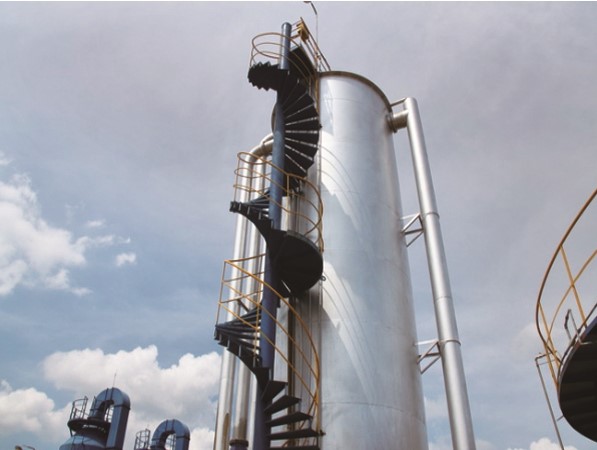
Photo of our independent research and development of catalytic reduction reactor equipment
Weishui Star (Beijing) Environmental Technology Co., Ltd.
Address: Building 25, Hepingli 7th District, Dongcheng District, Beijing Tel: 010-6406 7230 13810831170 Fax: 010-6405 7458   WeChat public number: W-Startech 备案号:ICP备12034271号 | 
关注微信公众号 |